
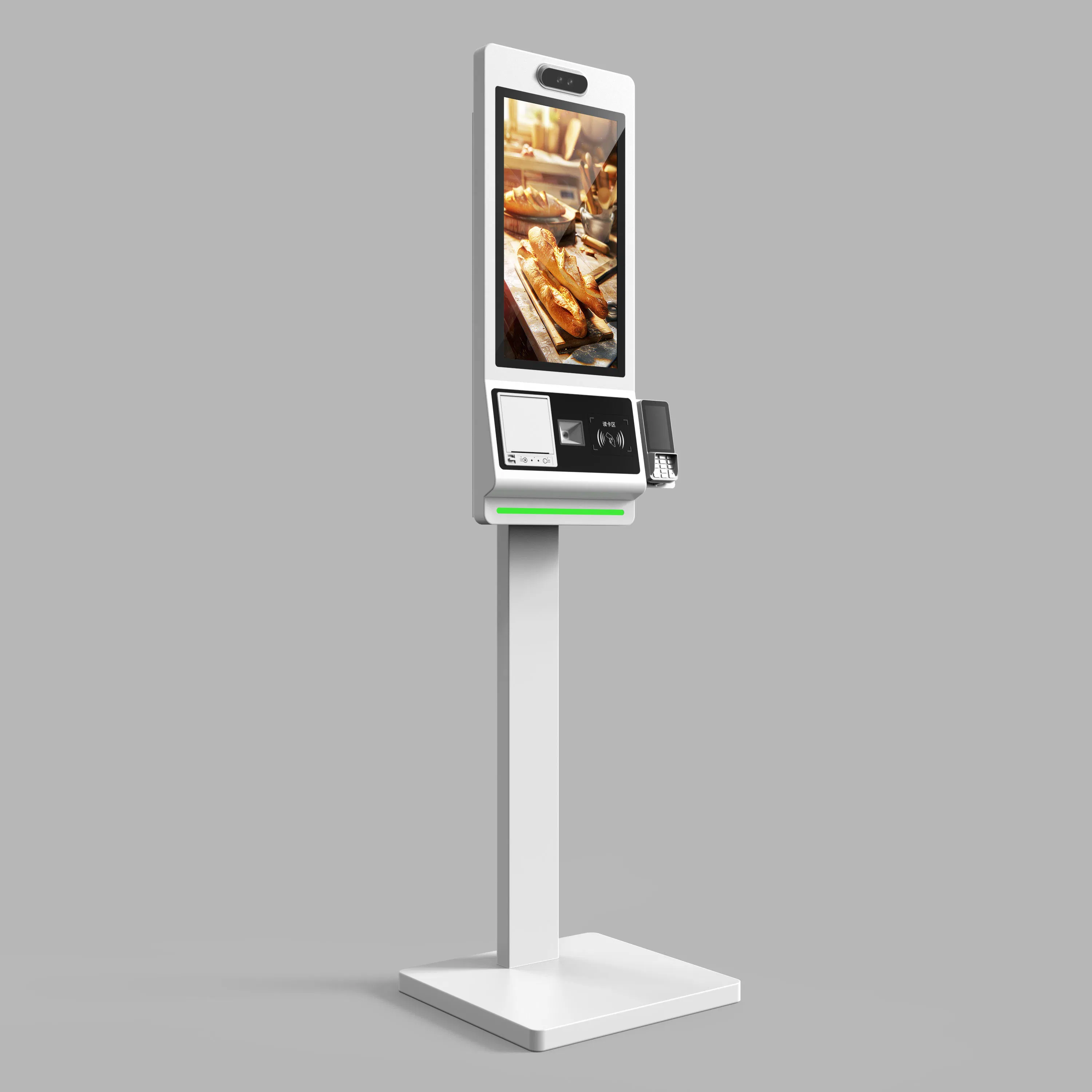
Most commercial display problems that appear in the first week are not manufacturing faults. They are site conditions that nobody wrote down, discovered by the installer on the day the crate is opened. A display that is correct for a 230 volt 50 hertz supply may be the wrong electrical configuration for the destination on the purchase order. A wall that looks solid may not accept the load of a 98 inch panel. A kiosk specified with wireless connectivity may sit in a concrete lobby where no wireless signal reaches. This FAQ sets out what has to be confirmed before an order is placed: voltage and frequency by market, why one stock keeping unit usually cannot serve every market, the power circuit and protection the site needs, network and signal requirements, mounting and environmental conditions, and the site survey sheet that removes most of these risks before the goods leave the factory.
Voltage, frequency and plug type by destination market
Mains supply is not uniform, and the differences that matter are the nominal voltage, the frequency, and the physical plug and socket. Northern America runs at 120 volts and 60 hertz on the plug types associated with the NEMA 1-15 and 5-15 standards. Japan runs at 100 volts, with the eastern and western halves of the country on different frequencies. Most of Europe, China, the Middle East, Africa and much of Asia run at 220–240 volts and 50 hertz, but they do not share a plug. Some South American markets use 127 volts, and a few use both 127 and 220 volts within the same country. A buyer who needs an exact answer for a specific destination should work from a published plug and socket reference rather than from memory, because the exceptions are numerous and expensive to correct after shipment (World Standards, Plug and Socket Types by Country, retrieved 29 September 2026).
| Region | Nominal voltage | Frequency | Plug and socket families |
|---|---|---|---|
| United States and Canada | 120 V | 60 Hz | NEMA 1-15 and 5-15 types |
| Japan | 100 V | 50 Hz east, 60 Hz west | NEMA 1-15 type |
| European Union, United Kingdom, Switzerland, Denmark, Italy | 230 V | 50 Hz | Type C and F, plus national types G, J, K and L |
| China, Australia and New Zealand | 220–230 V | 50 Hz | Type I |
| Middle East, Africa, South and Southeast Asia | 220 to 240 V | 50 Hz | Type C, D, G and M variants |
| Brazil | 127 V and 220 V | 60 Hz | Type C and N |
One practical point is often missed: an adaptor plug is not a substitute for the correct mains lead. Where a unit draws several amperes, as a high brightness window display or a large kiosk will, a travel adaptor adds resistance and heat at exactly the point where a poor connection is most dangerous, and it does nothing about the fact that the rating label and the certification belong to a market other than the one where the unit is being installed. Units shipped to a market should be built with that market's lead, plug and rating label, which is why the destination country is one of the first questions a factory asks.
Why one configuration cannot always serve every market
A display that will be plugged into a wall socket is usually built around a switching power supply that accepts a wide input range, typically 100–240 volts at 50 or 60 hertz, and in that case the electrical design covers both 120 volt and 230 volt markets. What still changes is everything around the power supply. The mains lead has to be the right length and gauge for the destination. The plug has to match the socket. The rating label has to state the voltage and frequency of the market where the unit is sold. The certification has to be held for that market. And because current is inversely proportional to voltage at a given power, the same display drawing 150 watts takes roughly 1.3 amperes at 120 volts and roughly 0.7 amperes at 230 volts, which changes the conductor sizing and the fuse rating even though the panel itself is identical.
Where a display has a fixed mains power supply instead of a wide-range one, the destination market has to be known before the order is placed rather than before shipment. This is most common on large video wall panels, on high brightness window displays and on kiosks where the internal power architecture is matched to the site. Frequency follows the same logic. A switch-mode display is indifferent to 50 or 60 hertz, but any unit containing a mains-driven motor is not, and that includes motorised rotating stands and any accessory with a pump, a fan driven from the mains, or a mechanical drive. Buyers specifying a rotating or motorised stand for a market they have not yet confirmed should raise the question at the quotation stage.
Power circuit and protection at the site
Electrical supply is the item most often under-planned on a display installation, because the load is distributed across many small units rather than concentrated in one machine. A video wall of nine 55 inch panels draws a modest total current but presents an inrush when all nine switch on together, and the resulting nuisance tripping is usually blamed on the panels. Three things prevent it. A dedicated circuit for the display group rather than a shared socket ring. A breaker sized for the inrush rather than only for the steady state. And a start-up sequence, either through the control system or through staggered power settings, so that the power supplies do not all charge at the same instant.
Protection follows from what the site actually cannot afford to lose. A single free-standing advertising unit in a shop window can tolerate an unplanned power cut. A control room video wall, a self-service payment terminal or a wayfinding kiosk in a transport hub cannot, and those installations should be assessed for an uninterruptible supply, surge protection and correct earthing. Earthing deserves a specific mention because it is not only a safety requirement — a floating or high-impedance earth is a common cause of unstable touch response and of video noise on long signal runs, and it is invisible until someone measures it.
It is also worth measuring the supply rather than reading it off the contract. Nominal voltage and delivered voltage differ, particularly in older buildings and in markets where the supply is nominally 220 volts but sags under load. Where the site is fed from a generator or an inverter rather than the grid, the waveform matters as much as the voltage, because a square or modified-sine output can upset a touch controller or a power supply in ways that look like a fault in the display. A measurement taken at the intended install point, at the intended time of day, is the cheapest diagnostic available to a buyer.
Network, signal and control requirements
Connectivity has become the specification item that most often changes after the order, so it is worth fixing precisely. An Ethernet point is the reliable choice for any display that will pull content from a network, and it should be confirmed at the wall or the ceiling rather than assumed to be present. Wireless is adequate for low-bandwidth scheduling but is a poor basis for video streaming in a dense commercial space. Cellular modules suit sites with no fixed line at all, such as roadside or temporary installations, and add an antenna and a data plan to the project.
At the signal level, the source matters as much as the display. A unit fed from a media player needs the right input set and adequate cable length for the resolution and refresh rate being used, since a cable that works at 1080p over three metres may fail at 4K over ten. Where protected content will be shown, both the source and the display have to support the content protection scheme required by the service, which is a specification point rather than a setting (HDMI Licensing Administrator, HDMI Specification, retrieved 29 September 2026). And where the display will be managed remotely, the control channel has to survive the site firewall, which means the ports and destinations used by the content management system should be listed and confirmed with the site's IT team before commissioning rather than on the day.
Bandwidth and resilience are the two remaining questions. Video content at high resolution and a high frame rate consumes bandwidth continuously, so the network path should be sized for the peak content rather than the average, and any unit that must keep playing when the network drops should be specified with local storage and a scheduled playlist rather than with streaming alone. Recording which content lives on the unit and which is fetched from the network is what allows a display to keep working during an outage, and it belongs in the specification.
Mounting, structure and environment
Mounting decisions are structural decisions. Wall mounting assumes a surface that can take the load and the pull-out moment of a cantilevered bracket, which means the wall build-up has to be known: concrete, brick, metal stud or a dry-lined partition. The interface pattern on the rear of the display is standardised — so a mismatch is usually solved with an adaptor plate, but the adaptor plate adds depth and has to be allowed for in the recess. Floor-standing kiosks need a level substrate and a fixing method appropriate to the floor, and a public-facing unit in an unstaffed location will normally also need anti-tamper fixings and a locked service access.
Environmental specification is where the difference between a correct and an incorrect order is largest. An indoor unit installed in a semi-outdoor location, such as an arcade or a covered walkway, will encounter moisture, dust and temperature swings that its enclosure was not tested against. Ingress protection is expressed through the IP code, which is defined by the international standard for degrees of protection provided by enclosures, and impact resistance is covered by a separate rating that ingress protection does not include (International Electrotechnical Commission, IEC 60529 Degrees of Protection, retrieved 29 September 2026). Brightness is the other environmental variable. A panel that reads well in a corridor is unreadable against a shop window facing the afternoon sun, and that is a brightness requirement rather than a contrast requirement, which is why window-facing installations are normally specified from a high brightness product rather than from a standard one.
Service access is the last mounting consideration and the one that is hardest to add later. A display recessed flush into a wall, a panel at the back of a video wall stack, or a kiosk bolted to a floor all need a defined route for maintenance: which unit can be removed first, which fixings are reachable, and how much clearance is available to lift a panel out. Where the design leaves no service route, a single failed unit can require dismantling part of the installation, so the question is worth asking while the layout is still a drawing. Buyers concerned about running cost should treat published power figures as a like-for-like comparison within one technology and one brightness class only, since a high brightness panel will always draw more than a standard one of the same size (ENERGY STAR, Monitors, retrieved 29 September 2026).
The site survey sheet to send with the enquiry
Nearly every specification change after an order can be traced to a site condition that was knowable at the enquiry stage. The list below is short enough to complete in one visit and covers the items that most often move a quotation.
| Item to record | Why the factory needs it |
|---|---|
| Destination country and site city | Sets voltage, frequency, plug, rating label and certification route |
| Measured voltage and frequency at the socket | Catches the difference between the national nominal value and the supply actually present |
| Whether the display circuit is dedicated or shared | Determines breaker sizing and whether a start-up sequence is needed |
| Mounting surface and its construction | Decides bracket type, fixing method and whether an adaptor is required |
| Ambient light level and direct sun exposure | Sets the brightness class and the surface treatment of the front glass |
| Indoor, semi-outdoor or fully outdoor | Sets the ingress and impact protection required |
| Network path available at the install point | Decides whether the unit needs Ethernet, wireless or a cellular module |
| Content source and management method | Fixes the player configuration, input set and control interface |
| Daily operating hours and expected temperature range | Determines whether the unit is specified for continuous duty |
| Quantity per site and expected reorder volume | Decides whether a custom enclosure or tooling investment is justified |
Applying this to a live project
Shenzhen Chengengtong Electronics produces commercial display hardware across advertising displays and digital signage, industrial and commercial monitors, interactive all-in-one panels, splicing video wall systems and self-service query and payment terminals, covering screen size, brightness class, touch technology, mainboard configuration, interface set, enclosure structure, installation method, logo, packaging and user documentation. The company holds GJB 9001C-2017 weapon equipment quality management system certification and operates a complete R&D, integration, sales and service chain from Bao'an District, Shenzhen.
If you are preparing an enquiry, the two attachments that shorten the process most are the site survey sheet above and the destination country with its mains supply. Send those with the quantity and the target installation date, and we will return a specification that fixes the electrical configuration, the mounting method and the connectivity before any tooling or production time is committed.